2024 marks our 40th year of creating shared experiences by connecting people with the greater region of Nashville and bringing a meaningful narrative through unforgettable structures.
Read More
2024 marks our 40th year of creating shared experiences by connecting people with the greater region of Nashville and bringing a meaningful narrative through unforgettable structures.
Read MoreAfter considerable growth in their Gulch location, Studio Bank reached out to collaborate on another tenant fit-out project.
Read MoreA brief look at the Nashville Green Brier Distillery design done by Anecdote Architectural Experiences.
Read MoreOur name has changed! Anecdote, formerly known as Tuck-Hinton, is excited to announce that after almost 40 years of serving our region we have renamed the firm to reflect our ethos.
Read MoreOur Partner, Mary Roskilly, has been honored to be within the Power 100 for the second year in a row. The Power 100 list is an assessment of the business community and their influence.
Read MoreTuck-Hinton rings in at #24 in this years Largest Women-owned business with $4.16 million dollars in revenue. We are honored to be on this list among other creative and talented woman owned businesses.
Read MoreTuck-Hinton had the pleasure of volunteering with Civic Design Center at Rose Park Middle School to help aid in the effort of placemaking through painting a mural.
Read MoreSome major developments have been made on the construction site of The Community Foundation of Middle Tennessee. Mass timber columns, beams, and exterior walls have been erected within the last month.
Read More1030 Music Row, a 5 story mass-timber office space, is set to complete early spring. The third building developed by Panattoni, they understand the importance of Music Row and it’s need to continue to grow and adapt to various industries in Nashville. 1030 will be the first mass timber building for Panattoni and the second to be constructed in the city of Nashville.
Read MoreScottsdale-based Evening Entertainment Group, Nashville-based Alpha Development and Phoenix-based Creation Equity have been eyeing Broadway as a perfect place to build a Bottled Blonde.
Read MoreMary Roskilly, our principal and owner, has been honored with being in this years Nashville Business Journal Power 100.
Read MoreRecess, located on a .75 - acre site at 625 Fourth Ave S, will be a hub for food, beverages, and live music. Hoping to accommodate 2,000 patrons, Recess is gearing up to be one of the largest open - air spaces in the city.
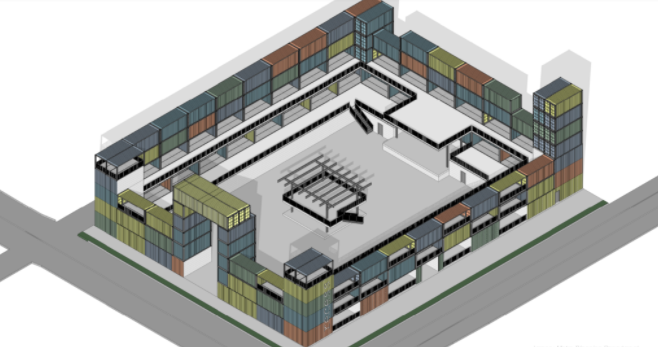
Read MoreRecent development of the 625 Fourth Ave S site, located next to Bob Dylan’s Heaven’s Door. The structure constructed out of shipping containers will be a hot spot for live music, food, and drinking activating 4th Avenue.
Read MoreCurtis Lesh sat down with the Nashville Post and answered some of the “big questions” about connectivity, density, and function of Nashville’s development.
Read MoreFor this years 2021 submission , Ivan Vanchev and KT Lamb decided to design and construct a long term parklet in the Wedgewood - Houston area.
Read MoreProgress at 1030 Music Row is moving at a rapid speed. On September 14th, the last DLT was placed, officially topping out the timber structure.
Read MoreApril 12th marks the opening day of the long awaited Tennessee State Library and Archives.
Read MoreMarch 1st 2021, the three original copies of the Tennessee Constitution we successfully moved into the soon-to-open Tennessee State Library and Archives Building.
Read MoreCurt and Mason Revelette, with design help from Tuck-Hinton, are bringing signature restaurant to the Four Season Hotel.
Read MoreLaurie Everett recently interviewed our one of our partners, Mary Roskilly. The article gets into Mary’s history both personal and professional, and giving advice for future architects.
Read More